
Marketing for recruitment agencies
Marketing for recruitment agencies has two audiences to win over. Clients need to trust you with their roles, and candidates need to find your jobs and apply. We build websites, job pages, and SEO that work for both, with every application and enquiry tracked.
- 1
- Recruitment case studies with results
- 2x
- total sessions in the year after launch, MD Care Group
- +33%
- organic sessions in the year after launch, MD Care Group
- 3
- Services we've provided for recruitment clients
Recruitment marketing agency reviews
















Why choose Bird Marketing for recruitment marketing
We build websites for recruitment agencies, staffing businesses, and employers hiring for themselves. Each reason below is backed by a result from one of our recruitment clients.
- 01A careers section that does the work
A dedicated recruitment section speaks to candidates directly, with roles, benefits, and an application form that's easy to finish.
2x total sessions in the year after launch
MD Care Group case study - 02Search visits from candidates and clients
Pages planned around how candidates and clients search help both find you, without relying only on job boards.
+33% organic sessions in the year after launch
MD Care Group case study - 03A site that keeps growing
We host and support the sites we build, so new roles, pages, and features keep going live long after launch.
+55% sessions in the site's second full year
MD Care Group case study
Recruitment marketing case studies
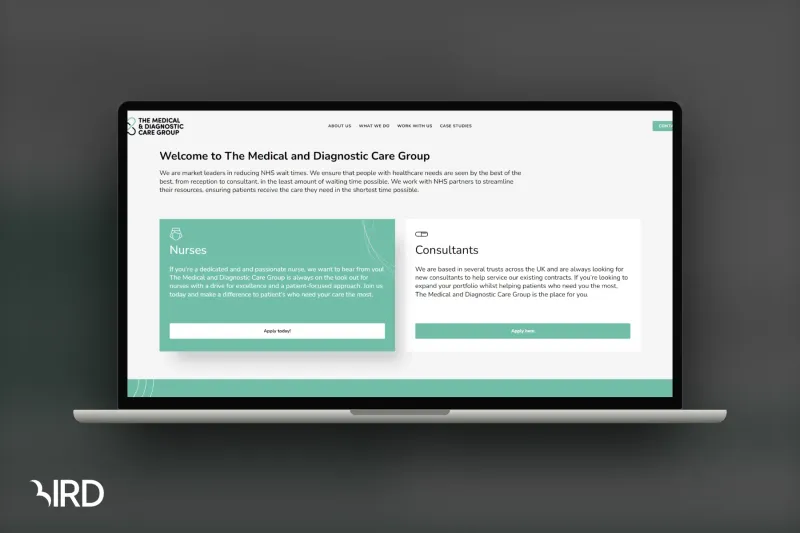
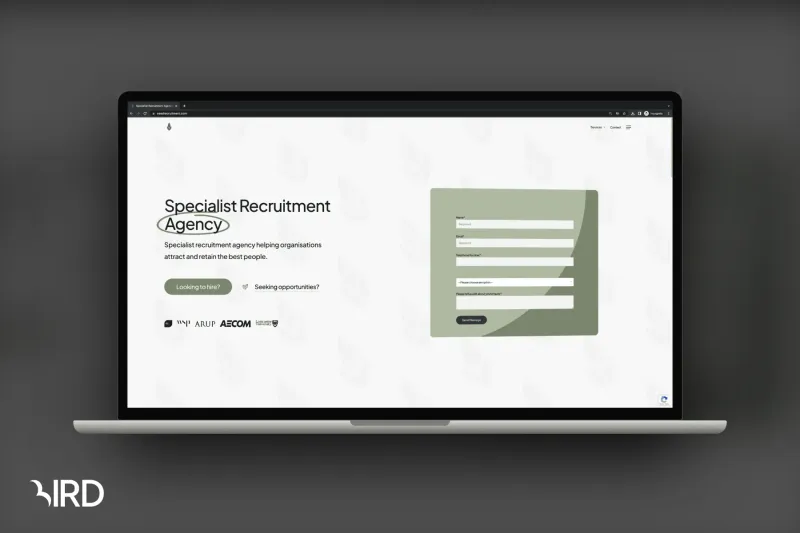
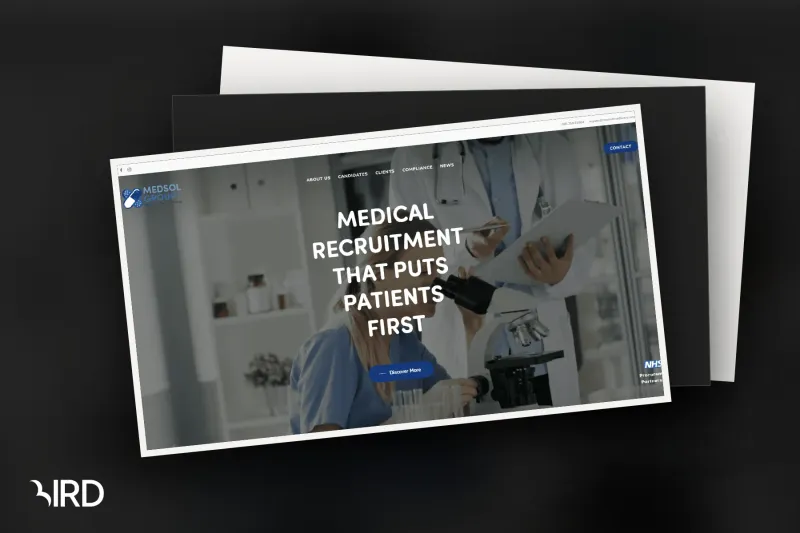
These case studies come from a clinical provider with its own careers hub, a specialist recruitment agency, and a healthcare staffing business. Each one shows how the website was built for candidates and clients.


Recruitment digital marketing services
Recruitment marketing covers your agency's own brand as well as the jobs you advertise. These are the recruitment digital marketing services we provide, with SEO for your sectors and job pages included. Each row shows how many of our recruitment case studies included it.
- SEO
Sector and location pages, job pages that Google can list, and content that answers candidates' and clients' questions.
Service page - Paid ads
Google Ads for hard-to-fill roles and for the sectors where you want more clients, with applications tracked.
Service page - Recruitment web design
Websites with a job search, short applications, and separate routes for candidates and clients.
Recruitment page1 recruitment case study - Web development
Job feeds from your recruitment software, candidate accounts, and job alerts.
Service page - Web hosting
Secure hosting on our own servers for sites that handle CVs and candidate details.
Service page1 recruitment case study - Web support
New features, fixes, and updates as your team and sectors grow.
Service page1 recruitment case study
How we approach recruitment websites and SEO
A typical recruitment marketing company focuses on job adverts. Our approach starts with your website, because that's where candidates apply and clients decide whether to get in touch.
Each job gets its own page with the details Google's job search reads, so roles can appear there as well as in normal results.
Clients and candidates want different things, so each has its own clear path through the site.
Pages for each sector and location you recruit in help both clients and candidates find you through search.
We track applications, CV uploads, and client enquiries back to the page or search that brought them in.
Rules for recruitment advertising and candidate data
Recruitment has its own rules on what a job advert must say, and strict ones on candidates' personal details. These are the ones we plan around most often, with the official source for each.
Pick a rule to see what it means for your site.
Regulation 27 of the Conduct of Employment Agencies and Employment Businesses Regulations 2003
- What it asks
- Agency job adverts must give the agency's full name and say whether each role is temporary or permanent. Adverts that give pay must also state the work, the location, and the experience needed.
- What it means for you
- Job pages are built with these details as required fields, so every listing includes them.
- The Conduct of Employment Agencies and Employment Businesses Regulations 2003, regulation 27legislation.gov.uk
- Conduct Regulations 2003: guidance for employment agencies and employment businessesDepartment for Business and Trade
The Equality Act 2010, with the EHRC's guidance on discriminatory adverts
- What it asks
- Job adverts mustn't discriminate, and wording such as gendered job titles can put off qualified people without anyone meaning to.
- What it means for you
- We check job templates and page copy for wording that could exclude candidates.
- Guidance on discriminatory advertsEquality and Human Rights Commission
Data protection law, with the ICO's guidance on recruitment and selection
- What it asks
- You need a lawful basis for using candidates' details, and you must tell them how their information will be used.
- What it means for you
- Application forms link to a clear privacy notice and ask only for what you need at that stage.
- Employment practices and data protection: recruitment and selectionInformation Commissioner's Office
CAP Code section 20, applied by the ASA
- What it asks
- Ads must make clear whether they offer a job or a business opportunity, and earnings claims need to be backed up.
- What it means for you
- Pay and earnings on job pages match the role, so a headline figure never oversells it.
- CAP Code section 20: Employment, homework schemes and business opportunitiesAdvertising Standards Authority
Google's job posting structured data guidelines
- What it asks
- Job markup goes on each individual job page, and its details, such as location and salary, must match what the page shows.
- What it means for you
- Each live role is marked up and expired roles are taken out, so your jobs stay eligible for Google's job search.
- Job posting (JobPosting) structured data for Job SearchGoogle Search Central
Every source is the rule's official page, checked 20 November 2026.
A recruitment marketing mix
A specialist agency, a staffing business, and an employer hiring for itself each need a different plan. Here's how the work might be shared out over the first two years for each one.
Pick a type of business to see how the work divides.
An agency recruiting in a few sectors, winning both clients and candidates. Sector pages and job pages do most of the work.
- First three months
A site with a job search, short applications, and separate routes for clients and candidates.
- Months four to twelve
Sector and location pages, with jobs marked up for Google's job search.
- Year two
More sectors and locations where the searches justify them, and case studies for clients.
A staffing business filling shifts and contracts at volume. Applications have to be quick, and roles change all the time.
- First three months
A job feed from your software, quick applications, and secure handling of candidate details.
- Months four to twelve
Ads for hard-to-fill roles, and pages for each type of role and area you cover.
- Year two
Job alerts and candidate accounts, so people come back for the next role.
An organisation recruiting for itself, often alongside a site for its customers. The careers section has to sell the job as well as list it.
- First three months
A careers section with real stories from your team and an application form that works on a phone.
- Months four to twelve
Pages for each type of role, and ads when you have several roles to fill at once.
- Year two
The careers pages are kept current as roles open and close.
Insights on recruitment marketing
Jason on keeping a recruitment site accurate as roles change.
We find recruitment sites run best when every job goes through the same template. It keeps listings complete and consistent, and it means nothing is missed when your team is adding roles in a hurry.

What recruitment clients say about us
MD Care Group worked with us on a website for its patients and for the clinicians it recruits.
They had an innate ability to understand our business needs and develop appropriate solutions.
 AnonymousOperations Director, MD Care Group
- +33%organic sessions in the year after launchThe MD Care Group case study
- 4.9Average rating from 287 reviews on Trustpilot, Google, GoodFirms and Clutch
- 1Recruitment case study with public results
Marketing for recruitment agencies FAQs
Common questions about recruitment marketing, from agency websites to SEO and job pages.
What does marketing for recruitment agencies involve?
Marketing for recruitment agencies usually covers your website, SEO for the sectors you recruit in, and job pages that Google can list. It has to win over clients with roles to fill and candidates looking for work, so we plan separate pages and routes for each.
What is recruitment marketing?
Recruitment marketing is how an agency or employer attracts candidates and promotes its roles. It includes your careers or jobs pages, search visibility, job board listings, and any ads you run. For agencies, it also covers marketing the agency itself to the clients who hire through you.
How does recruitment digital marketing help agencies win clients?
Clients often search for a specialist agency in their sector and area before they pick up the phone. Recruitment digital marketing makes sure your sector pages, case studies, and reviews show up in those searches, and that the enquiry form is easy to find.
What should you look for in a recruitment marketing company?
Look for experience with recruitment websites and job pages, plus case studies you can check. A good recruitment marketing company will ask how you track applications and client enquiries, and which sectors matter most, before it suggests any work.
Can you get our jobs into Google's job search?
Usually, yes. Google reads job posting markup on each individual job page, so we add it to your job template and keep the details in line with what the page shows. Expired roles need removing or marking as closed to stay eligible.
Do you do SEO for recruitment agencies?
Yes. SEO for recruitment agencies centres on sector and location pages, job pages, and content that answers candidates' and clients' questions. It's part of how we approach your website rather than a separate project, so the two are planned together.
No questions match that search.
Start your recruitment marketing project
- Tell us what you need
Share your website, the services you need and your goals.
- Get your proposal
Market research, the plan and every cost, set out in one document.
- Agree a scope
You’ll have a clear scope before work begins.