How customer lifetime value builds over time
Take a group of customers who all bought for the first time in the same month. Add up what they spend each month and the line climbs as repeat orders come in. Over two years, it can end up well above what their first orders were worth.
A second line, contribution, takes off the cost of serving those customers, such as the products, delivery, and support. It climbs more slowly than revenue. The months behind you are known figures. Beyond a year or so, both lines become forecasts, and the further ahead you look, the wider the range of likely outcomes gets.
Revenue LTV or contribution LTV
Revenue LTV is the simpler figure, but it can make customers look more valuable than they are. Contribution LTV is closer to what the business actually keeps.
Whichever one you use, say which it is and over what period. A 12-month LTV and a five-year LTV can tell very different stories, and any forecast leans heavily on how long you expect customers to stay.
Using customer lifetime value in advertising
If you know what a typical customer is worth over a year, you can judge whether a cost per acquisition is affordable, even when the first order doesn't cover it. Businesses with repeat customers, such as regular services or subscriptions, can often afford to pay more to win each customer than businesses that sell once.
It's safest to base budgets on the lifetime value you've already seen. Long forecasts are worth treating with care, as it's easy to be too hopeful about how long customers will stay.
Customer lifetime value in websites built for repeat custom
Each of these sites made the second booking or order as easy as the first, which is where lifetime value comes from.
- Recurring bookings in a client portal
Grease Gone's portal takes recurring bookings and stores each client's cleaning certificates. Because the bookings repeat, clients stay booked in, which makes it simpler for Grease Gone to keep them.
- Recurring cleans booked online
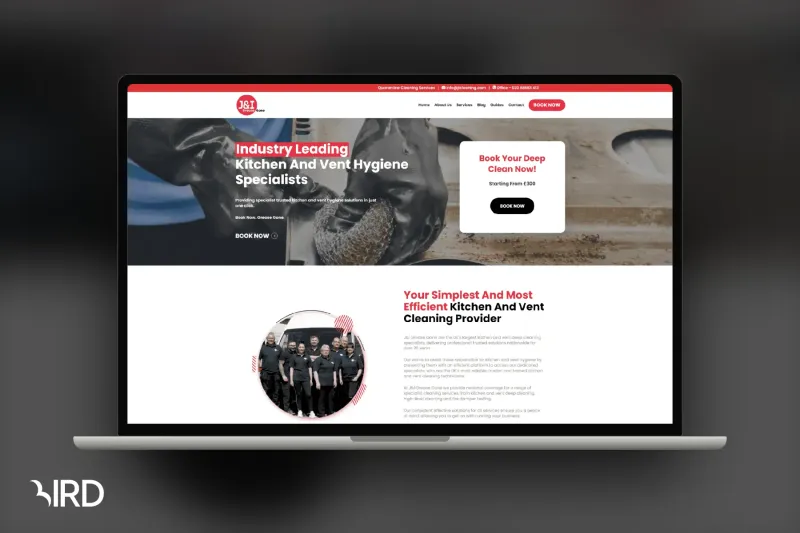
J&I Cleaning's new site launched with online booking for recurring cleans. Customers now book those recurring cleans through the website, and significant new enquiries arrive through it as well.
- A portal for trade orders
Each of FJ Harnett & Son's trade customers has its own login to a portal, where buyers can see the stock that's available and order it in one visit. The nursery says its trade customers are happier with the streamlined process.