
Website design for schools
Our website design for schools makes it easy for parents, pupils, and staff to find what they need. Every site has a clear home for the information schools must publish, and it's built so your team can update news and policies themselves. We work with colleges and training providers too.
- 4
- Education web design case studies with results
- 2 to 82
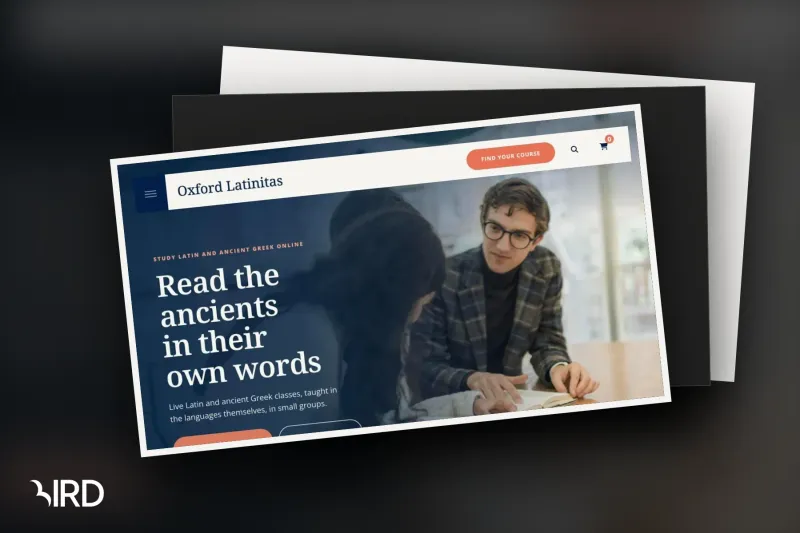
- keywords in Google’s top 10, Oxford Latinitas
- 5
- Services we've provided for education clients
Education web design reviews
 4.9/ 598 reviews
 4.9/ 564 reviews
 5.0/ 560 reviews
 5.0/ 565 reviews












School web design that works for parents and staff
Good school web design has to serve several groups at once, from prospective parents to pupils and staff. These are the parts we focus on most when we design a school or college website.
We plan the menu so admissions, policies, inspection reports, and results each have an obvious place. Parents find them in a couple of clicks, and so do inspectors.
We set up news, events, and term dates so staff can add them easily. The homepage then shows what's happening at school without anyone touching the design.
We design with WCAG 2.2 in mind, with readable text, clear contrast, and pages that work with a keyboard or screen reader.
Galleries show school life while keeping pupils' names away from their photos. Staff can take a photo down quickly when a parent opts out.
For schools with places to fill, we design admissions pages and open day booking that lead parents to the next step.
Rules every school website has to follow
School websites have more rules behind them than most, from what must be published to how accessible it needs to be. These are the requirements we design around, with the official source for each.
Choose a requirement to see where it sits on the site.
Department for Education guidance
- What it asks
- Maintained schools must publish set information online, including admissions, Ofsted reports, results, and key policies.
- What it means for you
- Each item gets a clear place in the menu and its own page or file, so nothing is hard to find.
- What maintained schools must or should publish onlineDepartment for Education
Department for Education guidance for academies, free schools, and colleges
- What it asks
- Academies, free schools, and colleges have their own DfE guidance on what to publish online.
- What it means for you
- We build the site's structure around your trust's list, which can differ from a maintained school's.
- What academies, free schools and colleges must or should publish onlineDepartment for Education
The Public Sector Bodies (Websites and Mobile Applications) Accessibility Regulations 2018
- What it asks
- Schools and nurseries are partly exempt, but content for essential online administrative functions still has to meet the accessibility rules.
- What it means for you
- We make forms, payments, and other admin tasks accessible as standard, and design the rest of the site to the same level.
The Education (Independent School Standards) Regulations 2014, Part 6
- What it asks
- Independent schools must make set information available to parents, on their website where they have one.
- What it means for you
- We design a clear policies and information section alongside the pages that sell the school.
Data protection law, explained by the ICO and the Department for Education
- What it asks
- Photos for a school website are personal data, so parents or pupils should know how they're used and be able to opt out.
- What it means for you
- Galleries are easy for staff to edit, so a photo can come down quickly when someone opts out.
- Taking photographs: data protection advice for schoolsInformation Commissioner's Office
- Taking and using photos and videos, and using CCTV in schoolsDepartment for Education
Every source is the rule's official page, checked 20 November 2026.
Education web design case studies
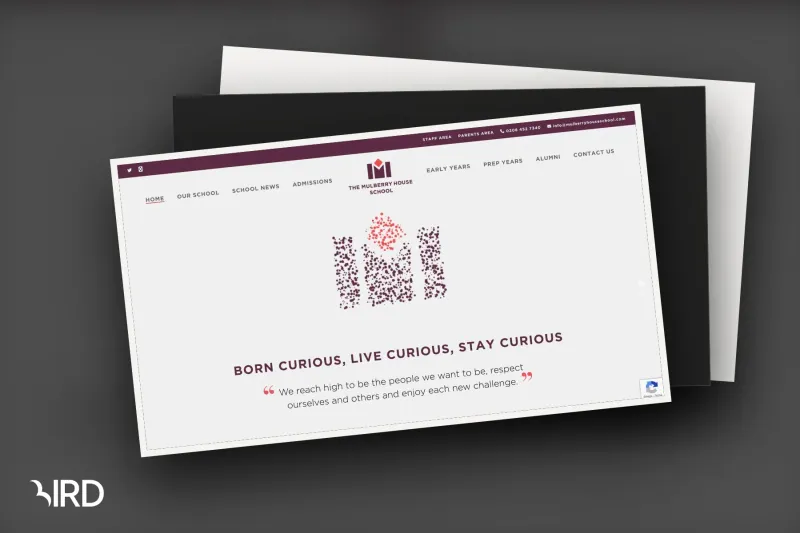
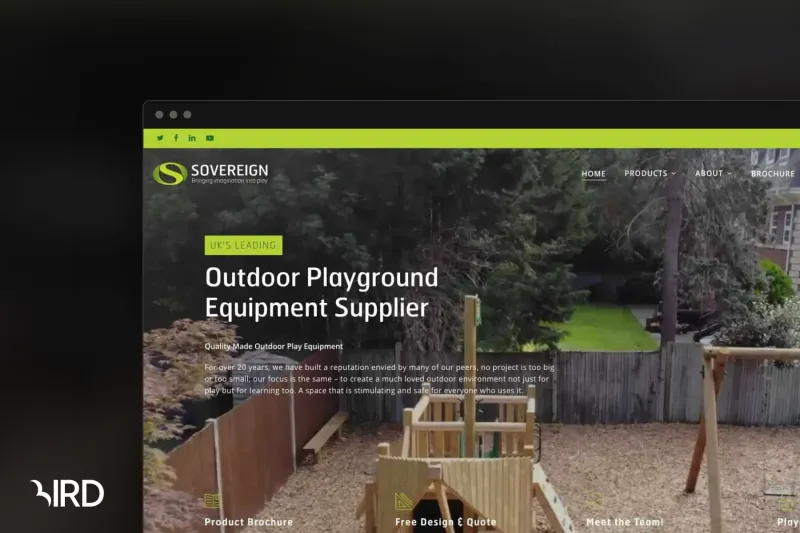
These websites were built for a school, an online Latin and Greek school, a training provider, and a playground supplier that sells to schools. Only figures from the web design side of the work are shown.





How much a school website costs
The cost of a school website mostly comes down to its size, the features it needs, and how much content has to move across. Below, you can see what tends to keep a build simpler and what adds to it.
| What affects the cost | Usually a simpler build | Usually a bigger build |
|---|---|---|
| Size of the site | One school with a few key sections | A trust with several schools sharing one design |
| Features | News, events, and contact forms | Open day booking, payments, or a parent portal |
| Content to move | A small site with recent pages | Years of news, policies, and files to move across |
| Design | Layouts based on ones we've built before | A fully bespoke design with custom illustration |
What makes our school websites different
As an education web design agency, we've seen the same problems on school sites again and again. These are the usual ones, and what we do instead.
The usual way: Statutory pages buried several menus deep.
Our way: A clear information section, planned from the DfE's list.
The usual way: Only one person knows how to update the site.
Our way: Simple editing for news, events, and policies, with a handover for staff.
The usual way: Photos uploaded with pupils' names in the file.
Our way: Galleries set up to keep names off images and to remove photos easily.
The usual way: An old theme nobody can safely update.
Our way: A site on a current, supported setup that's hosted and kept up to date.
Insights on school website design
Phoebe on designing a school site that staff can keep up to date.
Most schools don't have a web person, so we design the site around the few things staff update every week. If adding a newsletter is quick and simple, the site stays current without anyone chasing it.

Feedback on our school websites
Northlands Infant School & Nursery asked us to rebuild its website, and this is what the school told us afterwards.
Big improvement in clarity and mobile use. Staff can update pages easily, and parents tell us the site is much simpler to navigate.
 AnonymousMarketing, Northlands Infant School & Nursery
- 4.9Average rating from 287 reviews on Trustpilot, Google, GoodFirms and Clutch
- 4Education web design case studies with public results
Services to add to a new school website
Once your new site is live, a few services help it keep working for you. These are the ones schools and colleges most often add after launch.
- Education SEO
Education SEO helps parents and students find your admissions, open day, and course pages in Google.
Education page - Web hosting
We host the school sites we build on our own servers, so updates and security fixes go through one team.
Service page - Web support
Our support team can post news, swap policies, and fix problems when your staff are short on time.
Service page
Website design for schools FAQs
What schools and colleges usually want to know before starting a new website.
What should a school website include?
A school website should include everything schools must publish, such as admissions, policies, inspection reports, and results, plus news, events, and contact details. Good website design for schools also makes these easy to find on a phone, as most parents check on their mobile.
How much does website design for schools cost?
It depends on the size of the site, the features you need, and how much content has to move across. A single school's website usually costs less than a trust site shared by several schools. We'll put together a quote once we've agreed the scope with you.
Do you design websites for academy trusts?
Yes. Education web design for a trust often means one design shared across several schools, each with its own pages and news. We plan the structure around your trust's publishing requirements, so each school's statutory information is easy to find.
Can staff update the website themselves?
Yes. We build school web design around the updates staff make most, such as news, events, letters, and policies. We show your team how it works at handover, and our support team can help if anyone gets stuck.
Does a school website need to be accessible?
Yes. State schools are partly covered by the public sector accessibility regulations, which include essential admin tasks such as forms. Every school also has families with access needs, so we design the whole site with WCAG 2.2 in mind.
How do I choose an education web design agency?
Look for an education web design agency with school websites you can visit and click around. Ask how it handles statutory information, accessibility, and photos of pupils, and who will look after the site once it's live.
No questions match that search.
Start your school website project
- Tell us what you need
Share your website, the services you need and your goals.
- Get your proposal
Market research, the plan and every cost, set out in one document.
- Agree a scope
You’ll have a clear scope before work begins.