
Healthcare website design
Our healthcare website design is built around what patients need to know before they book. Each site makes your treatments, clinicians, and ratings easy to find, and it's set up for the CQC and GDC requirements that apply to you. Booking and enquiry forms only ask what they need to.
- 2
- Healthcare web design case studies with results
- +55%
- sessions in the site's second full year, MD Care Group
- 2x
- total sessions in the year after launch
Healthcare web design reviews
















Medical website design for clinics and practices
Medical website design comes down to three things. Patients need to trust you, the next step needs to be easy, and their details need handling properly. This is what each part usually covers on the sites we build.
- Trust before the first visit
People want to know who'll treat them and how you're rated.
- Clinician profiles with qualifications and registration numbers
- Your CQC rating shown with its official widget
- Genuine patient reviews and accreditations
- A clear route to booking
Each page leads to one obvious next step.
- A page for each treatment or service
- Online booking or a short enquiry form
- Click to call on every page for phone users
- Patient data handled carefully
Forms and tracking are set up for health information from the start.
- Forms that only ask what's needed at first
- Health details kept out of analytics
- Secure hosting that's kept up to date
Requirements for healthcare and dental website design
Several regulators say what a healthcare website has to show, and dental website design has a list of its own from the GDC. Data protection law then covers what a site collects. These are the requirements we design around, with the official source for each one.
Pick a requirement to see how we build it in.
Regulation 20A, enforced by the Care Quality Commission
- What it asks
- Providers with a CQC rating must show it on their website, and CQC strongly recommends its own widget for this.
- What it means for you
- We build space for the widget into the homepage and location pages from the first design.
- Regulation 20A: Requirement as to display of performance assessmentsCare Quality Commission
- How providers must display ratingsCare Quality Commission
Guidance on advertising, from the General Dental Council
- What it asks
- Dental websites should list each professional's qualification and GDC number, the complaints procedure, and when the site was last updated.
- What it means for you
- Profiles and the footer carry these details, and the last updated date can change on its own.
- Guidance on advertisingGeneral Dental Council
Data protection law, explained by the Information Commissioner's Office
- What it asks
- Health information is special category data, which needs a lawful basis and an extra condition to collect.
- What it means for you
- Forms ask for the minimum at first, and anything sensitive goes to your team rather than to third-party tools.
- What is special category data?Information Commissioner's Office
The CAP Code, applied by the Advertising Standards Authority
- What it asks
- On pages about prescription-only treatments, before and after photos are likely to be seen as claims that the treatment works.
- What it means for you
- We design galleries for treatments where they're allowed, and leave them off pages where they aren't.
- Health: Prescription-only medicines on websitesAdvertising Standards Authority
WCAG 2.2, from the World Wide Web Consortium
- What it asks
- WCAG sets out how to make websites usable with screen readers, keyboards, and larger text.
- What it means for you
- We design with WCAG 2.2 in mind and check the key pages against it, as many patients are older or have a disability.
- Web Content Accessibility Guidelines (WCAG) 2.2World Wide Web Consortium
Every source is the rule's official page, checked 20 November 2026.
Healthcare web design case studies
Our healthcare web design projects include a site for a clinic group that also recruits its own clinicians, and two for a private rehab provider. Where a site shows a figure, it's from the web design side of the work.
- Two audiences on one site
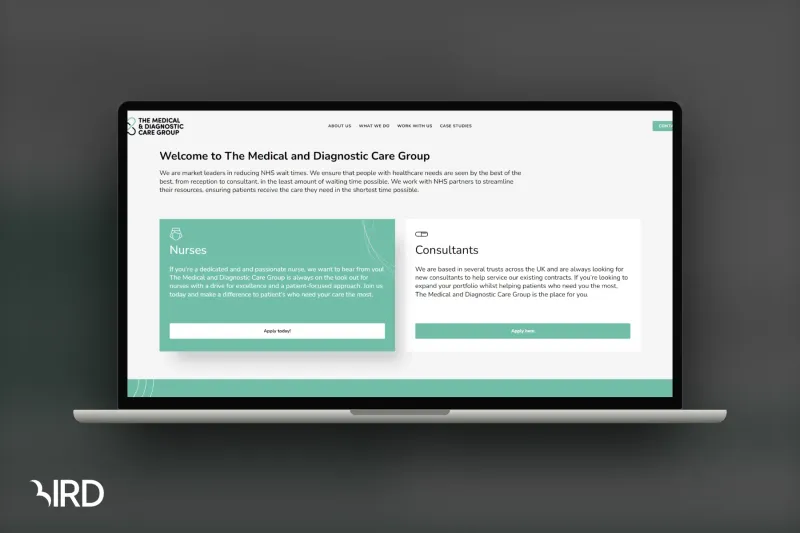
We built MD Care Group a site that speaks to patients and to clinicians, with a careers hub to help staff its clinics.
- Two website builds for a rehab
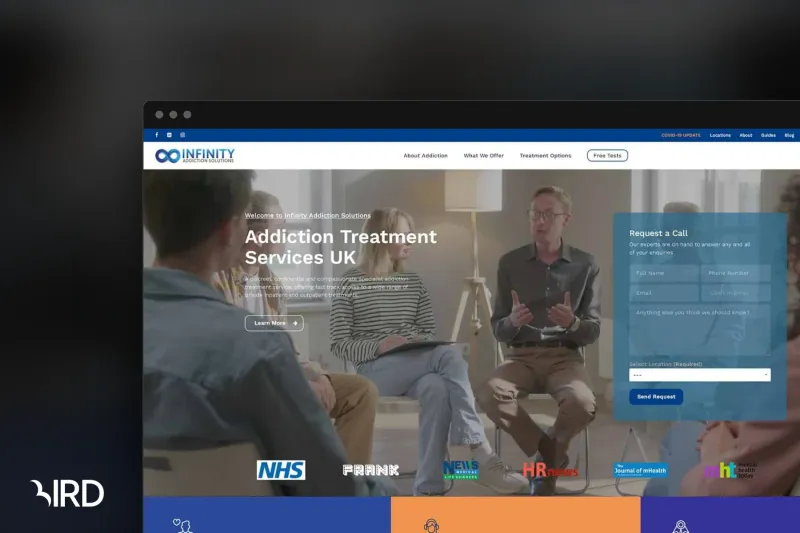
Infinity Addiction Solutions has had two websites built by us, and we host and support the current one.

How much a healthcare website costs
Every healthcare website is priced on what it needs to do. These are the things that make the biggest difference to the cost, so you can see where the work goes before we talk about a quote.
How many treatments and locations
Each treatment, service, and clinic usually gets its own page, so a large range takes more design and writing time.
Booking and integrations
Linking your practice management or booking system takes more work than a simple enquiry form, depending on the system.
Clinician profiles and content
Profiles, treatment copy, and photography all add time, especially where clinicians need to check the wording.
Data and accessibility needs
Sites that collect health details or serve NHS patients need more care over forms, hosting, and accessibility.
How we design for patients
A medical website design company will often use the same template for every clinic. We start from your patients and your regulator instead, and these are the main places that shows.
The usual way: A template with stock photos of smiling doctors.
Our way: A design built around your own clinicians, rooms, and treatments.
The usual way: Every form asks for full medical details up front.
Our way: Forms ask the minimum at first, and the rest is handled by your team.
The usual way: Ratings and registration numbers added as an afterthought.
Our way: CQC and GDC details planned into the layout from the first wireframe.
The usual way: Pages written once and then left alone.
Our way: A site your team can update easily, with support from us when it's needed.
Insights on healthcare website design
Jessica on designing for patients who might be anxious.
People often land on a clinic's website when they're worried about something. We design healthcare sites to feel calm and simple, with the answer to their main question and a way to get in touch on every page.

What healthcare clients say about our websites
MD Care Group's operations director gave us this feedback after we built the group's website and careers hub.
They had an innate ability to understand our business needs and develop appropriate solutions.
 AnonymousOperations Director, MD Care Group
- +55%sessions in the site's second full yearThe MD Care Group case study
- 4.9Average rating from 287 reviews on Trustpilot, Google, GoodFirms and Clutch
- 2Healthcare web design case studies with public results
Other services for healthcare websites
A new healthcare website does most for you when people can find it and it stays up to date. These are the services clinics most often add once the site is live.
- Healthcare SEO
Healthcare SEO brings people searching for your treatments to the pages we've designed for them.
Healthcare page - Web hosting
We host the sites we build on our own servers, so updates and fixes go through one team.
Service page - Web support
Our support team can update clinician profiles, opening times, and treatment details whenever they change.
Service page
Healthcare website design FAQs
Questions clinics, practices, and care providers often ask before starting a new website.
What should a healthcare website include?
A healthcare website should show your treatments, your clinicians, and how to book, with your CQC rating where it applies. Good healthcare website design also covers accessibility, secure forms, and clear information on fees and complaints. For dental practices, the GDC asks for registration numbers and the date the site was last updated.
Do you design dental websites?
Yes. Our dental website design covers a page for each treatment, profiles for each dentist with their GDC number, and booking or enquiry forms. Dental web design also needs to work well on phones, as most patients look for a dentist nearby on their mobile.
How is medical website design different from other web design?
Medical website design has more rules to meet. Your regulator may say what the site must show, the ASA limits what you can claim, and patient data needs more care. Medical web design also leans heavily on trust, so clinicians, ratings, and reviews take up more of the page.
Can you add online booking to a clinic website?
Yes. Clinic website design often includes online booking, either through your practice management system or a booking tool you already use. We check how your system connects before we quote, as some link up easily and others need more work.
How do I choose a medical website design company?
Look for a medical website design company with healthcare sites you can visit and a clear approach to patient data. Ask how it handles forms, hosting, and accessibility, and whether it understands your regulator's requirements. Healthcare web design is also easier when the same team can host and support the site afterwards.
How long does a healthcare website take to build?
It depends on the number of pages, any booking system, and how quickly treatment pages can be checked. Content usually takes the longest, as clinicians often need to review it. We agree the timings with you once the scope is clear.
No questions match that search.
Start your healthcare website project
- Tell us what you need
Share your website, the services you need and your goals.
- Get your proposal
Market research, the plan and every cost, set out in one document.
- Agree a scope
You’ll have a clear scope before work begins.