Which SEO practices count as white hat
Google's spam policies are the clearest guide to where the line sits. Fixing crawl and indexing issues, improving the facts on a page, and earning links from relevant sites all follow its guidance. Buying links from link farms, hiding keyword text from visitors, and publishing near-identical town pages all break it.
It also helps to ask who a change is for. If it's there mainly to influence rankings, and does nothing for the people visiting, it's worth a second look. Most practices fall clearly on one side. The grey areas tend to be around links, where the question is whether a link was earned or paid for.
- Fix crawl and indexing issues
- Improve facts and add sources
- Earn references from relevant sites
- Buy links from link farms
- Hide keyword text from visitors
- Publish near-identical town pages
The pace of white hat SEO
White hat work usually takes longer to show results, especially on a new domain with no history. Rankings build as the site earns trust, and that tends to take months.
The upside is that those rankings last. Sites that rely on spam tactics can lose their positions quickly when a manual action or an algorithm update catches up with them. Recovering from that can take far longer than the gains did.
Checking a white hat SEO promise
The label itself isn't a certificate. Any agency can call its work white hat, so it's worth asking what it will actually do. Clear answers about content, technical fixes, and how links are earned are a good sign. A promise of guaranteed rankings is a reason to ask more questions.
White hat SEO in an industry known for spam
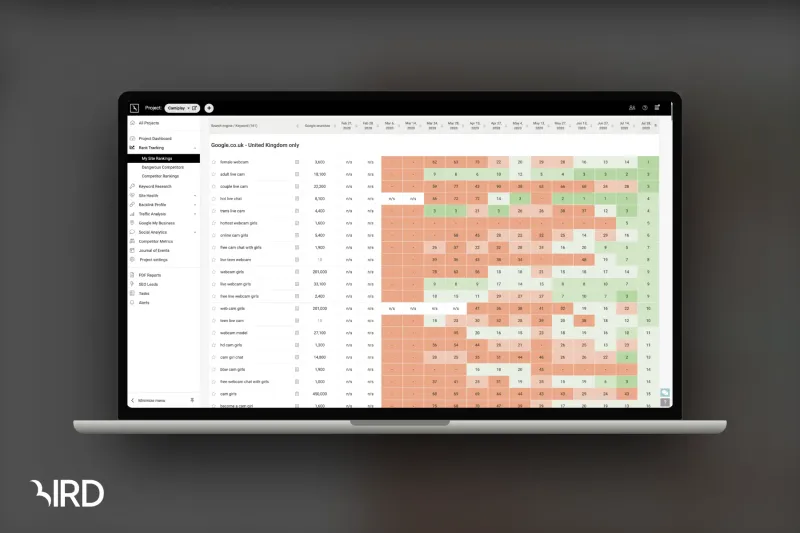
Camiplay launched in a market where SEO is often done in a spammy way, so we kept to white-hat methods.
- White-hat SEO on a brand-new domain
Camiplay is a start-up adult webcam platform that launched on a domain with no history. Our SEO specialists built its organic profile with traditional white-hat methods and good on-site SEO. That gave it rankings that don't depend on the spammy tactics common in the industry.